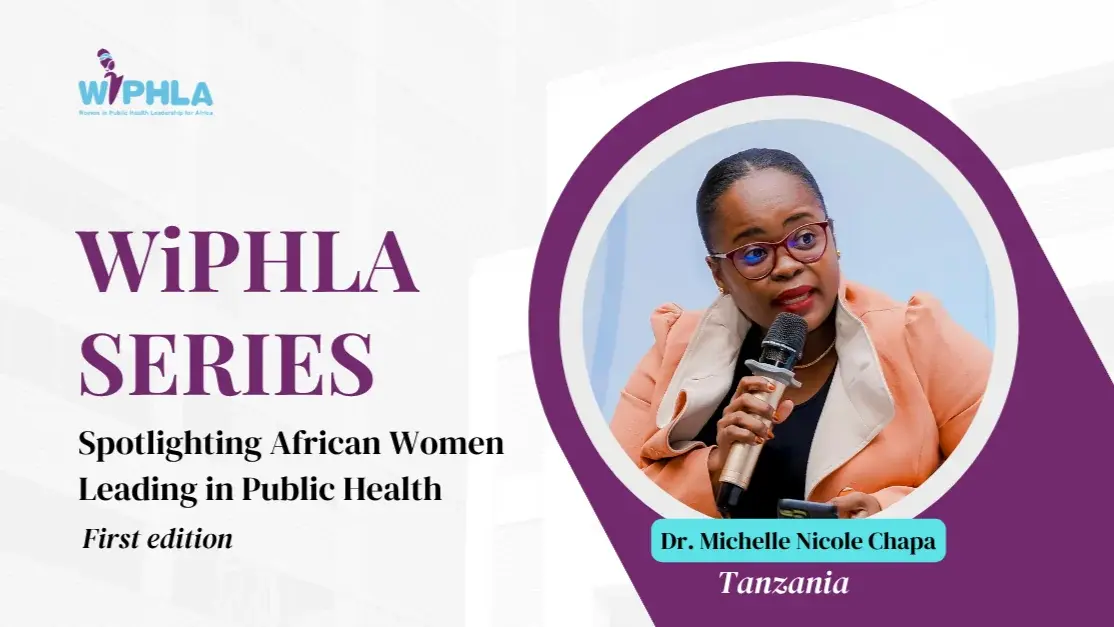
Dr. Michelle Nicole Chapa is on a quiet but determined mission: to bridge the gap between mental health research and real-world implementation in Tanzania, and across Africa. Right now, that mission looks like an active campaign for the decriminalization of suicide, work that most people do not even know needs to be done. In Tanzania, suicide is still a criminal offence.
Her path here was anything but straight. She wanted to be a pilot, but the expenses were too much for her family. Then a soldier, until her mother put a stop to that quickly. She tried law, left when a lecturer suggested success there was not based on merit alone, moved to accounting and finance, and eventually found her way to medicine.
It was during COVID, while she was battling a depression she did not even know she was in, that she enrolled for her Master of Public Health. She was not planning a career pivot. Studying just makes her feel alive, she says; it reignites something in her. But once she got into it, she realised public health was what she had been reaching for all along. She just did not have a name for it.
In medical school, public health was seen as a research degree, something nice to have, but not a real specialty. Even as she was enrolling, colleagues asked why she would leave emergency medicine for that degree. The message was clear: public health was an add-on, not a destination. One person told her, and it has stayed with her, that if medicine is a meal, public health is just an ingredient.
Then the scale of it changed her mind. When she realised she had been going through depression as a medical doctor, someone trained to recognise these things, she started asking herself a different question.
What about the woman selling vegetables in the market? Does she even have the language for what she is feeling?
That question changed everything. There are so few people giving ordinary people the vocabulary to understand what they are going through. That, she says, is a public health problem. And once she saw it, she could not unsee it.
She attended the World Health Summit regional meeting in Nairobi recently, and something became clear: without ever intending to, she is becoming a policy advocate, driven to influence legislation and systems, not politics for its own sake. Many of the people shaping policy have never experienced the mental health system from the patient’s perspective. They have never watched people lose their lives because the system failed them. She has. And lived experience, she insists, is not just a story. It is expertise. It offers insights that data alone cannot, and it deserves a place at the policy table.
No two weeks look the same. She creates content to educate people on mental health. She speaks with individuals who reach out, sometimes through a referral. People call her a therapist; she keeps correcting them. She is not a therapist. But she listens, she explains, and she connects people to the right help.
She is also doing advocacy around the decriminalization of suicide in Tanzania, work that is slow and frustrating but necessary. She is writing a critical essay on how current legislation and policy assist or impede prevention and care for people with suicide ideation or who have attempted suicide. And she is in the early stages of a community needs assessment, trying to understand what communities already know about mental health and what support they would actually want, before she designs any intervention. She has already engaged the local government and is waiting for a response. Meaningful systems change takes time, and she is committed to building it on a foundation of listening first.
The one thing she wishes more people understood is the gap between research and implementation. There is so much research, so many frameworks, so much data and evidence, but very little of it becomes policy or practice. Policymakers are not researchers. They do not read the journals, and even when they do, they often do not understand the language. That is why she started her foundation. If we are publishing research that never reaches the people making decisions, what are we actually doing?
To this day, Tanzania lacks a national mental health policy, and its mental health legislation has not been updated to reflect contemporary needs and international human rights standards. Advocates have been pushing for mental health reform in Tanzania for decades, yet progress has been slow. There is clearly something she does not yet know, and she is determined to find out what it is.
Her proudest moment so far is realising that she is exactly where she is supposed to be. That sounds simple, but it was not. For a long time she doubted herself, with everyone around her telling her to pursue another specialty. But the moment she committed to mental health, something shifted. She can stay up all night reading mental health articles and feel no boredom. That is not work. That is calling.
And then there are the smaller moments that carry the most weight. A mother reached out recently; her daughter has intellectual disabilities, and no doctor had ever properly explained what that meant or how she could support her child. Dr. Michelle helped her understand. She called afterwards, and you could hear the relief in her voice. Those phone calls are proof that this work matters.
To a woman just starting out in public health, she says: know what you stand for. Public health is a vast field, and without a clear sense of purpose, it is easy to drift, or worse, to follow wherever the funding goes. Choose a niche that genuinely resonates with you. Go deep, develop expertise, and stay committed. And when it gets frustrating, and it will, your reason for being there is what will keep you standing.
Complete this sentence: public health in Africa needs more awareness, understanding, and implementation. We need people to know what is happening. We need people to truly understand it. And then we need to actually do something about it.
Dr. Michelle Nicole Chapa MD, MPH is a public health specialist, mental health systems consultant and speaker. She helps companies reduce burnout and improve performance through mental health system design, and is dedicated to bridging the gap between mental health research and policy implementation in Tanzania. She is an advocate for the decriminalization of suicide.
Read her full profile on LinkedIn →
This article is part of WiPHLA’s series spotlighting African women leading public health across the continent. If you would like to support their work, visit our donate page.